Building an AI SaaS product is exciting, but one of the toughest decisions founders face is how to price it. AI products often come with unique costs—from compute and model usage to storage and data processing. Traditional SaaS pricing strategies don’t always translate directly. This blog explores the most effective pricing models for AI SaaS, their advantages, and the trade-offs you should consider before launching.
At Gen Z Academy, we analyzed dozens of AI SaaS startups and found that companies with transparent, usage-aligned pricing saw 28% higher customer retention compared to rigid subscription-only models.
Introduction: The challenge of pricing AI SaaS
Unlike standard SaaS, AI services often involve variable costs. Running an API call to a large model can be significantly more expensive than serving static content. Customers want predictability, while providers need to cover costs and scale profitably. The challenge is finding a model that balances fairness, scalability, and sustainability.
"Great pricing models align customer value with provider sustainability."
Popular pricing models for AI SaaS
Here are the most common strategies companies use today:
- Subscription-based: Flat monthly/annual fees for predictable access. Simple but may misalign with variable AI usage costs.
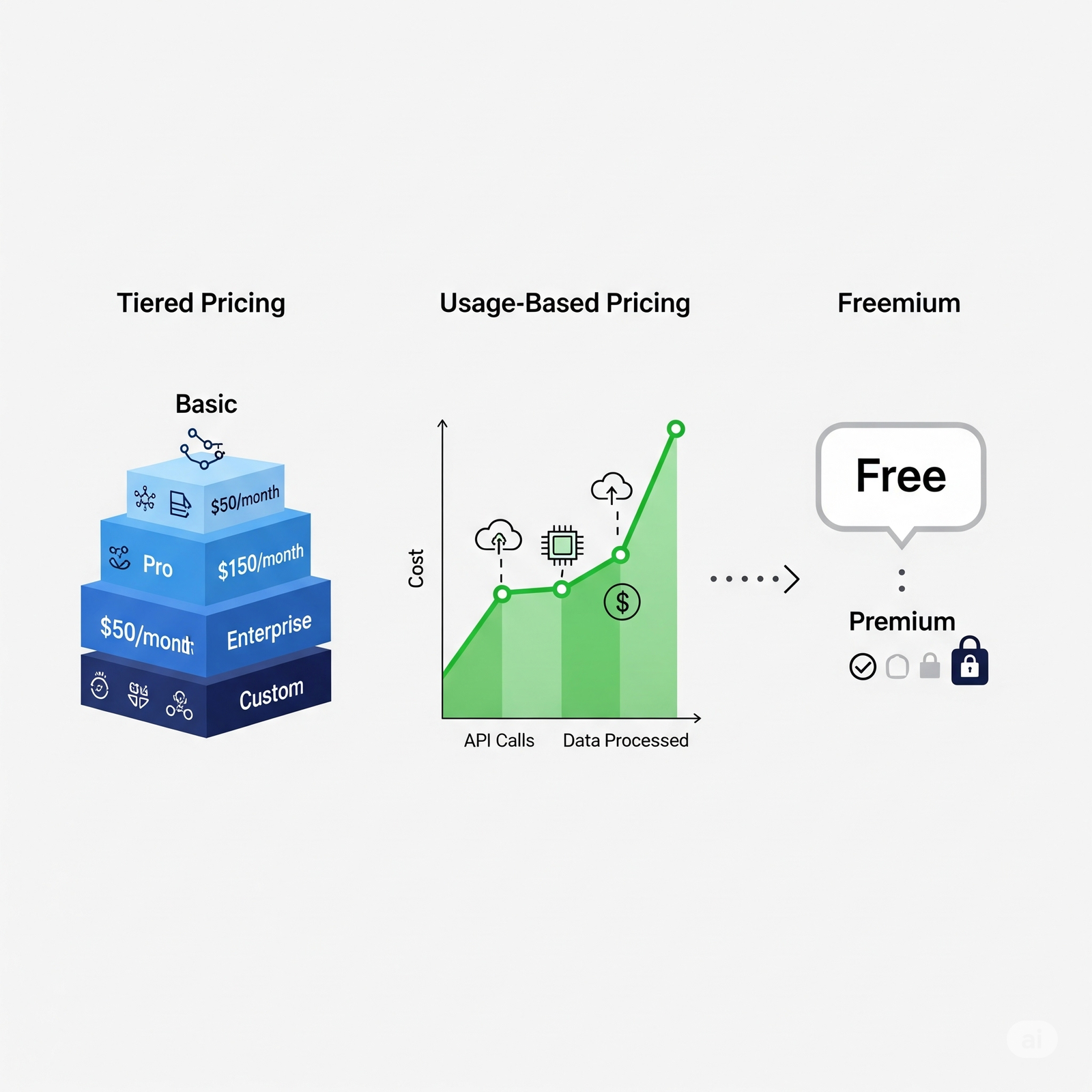
- Usage-based (pay-as-you-go): Customers pay for what they consume (e.g., API calls, tokens). Fair but harder to predict for budgeting.
- Tiered plans: Mix of subscriptions with usage caps. Offers predictability while scaling with demand.
- Freemium: Basic access for free, premium features at cost. Encourages adoption but must balance free vs. paid users.
- Hybrid models: Subscription for core features, usage-based for heavy workloads—best of both worlds.
Factors influencing the right model
Choosing the right model depends on:
- Cost structure: High compute costs push towards usage-based models.
- Customer type: Enterprises often prefer predictability; startups may prefer flexibility.
- Market maturity: New products benefit from freemium to drive adoption.
- Value delivered: Pricing should map to how customers perceive benefits (e.g., productivity, accuracy, speed).
Best practices for AI SaaS pricing
From real-world launches, here are tips to make pricing work:
- Be transparent: Customers dislike surprise overage charges.
- Offer flexibility: Give multiple options—subscription, usage, or hybrid.
- Start simple: Launch with fewer tiers, refine as usage data grows.
- Iterate often: Pricing is not set-and-forget; adjust based on adoption and costs.
Conclusion: Pricing as a growth lever
Pricing AI SaaS products is as much about strategy as it is about numbers. The right model can reduce churn, boost adoption, and ensure sustainability. The key is alignment—ensuring customers feel they’re paying fairly for the value they receive while the provider covers costs profitably. As AI SaaS continues to expand, flexible and transparent pricing will be the ultimate competitive edge.